Pillar 04 · Production management

Tell the lab what to do.
Not just what was done.

Most tissue culture software documents the past. InVitroManager schedules your future — production planning, work assignment, and bottleneck analysis built around how plants actually flow through your operation.

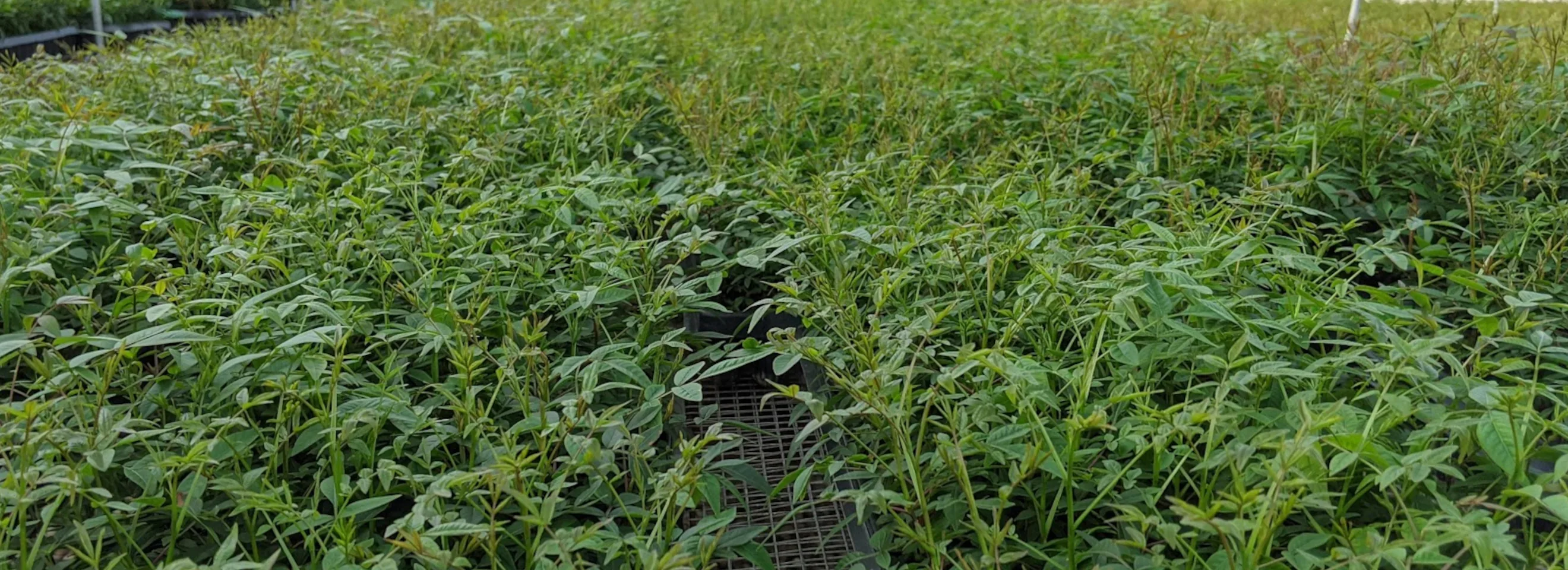
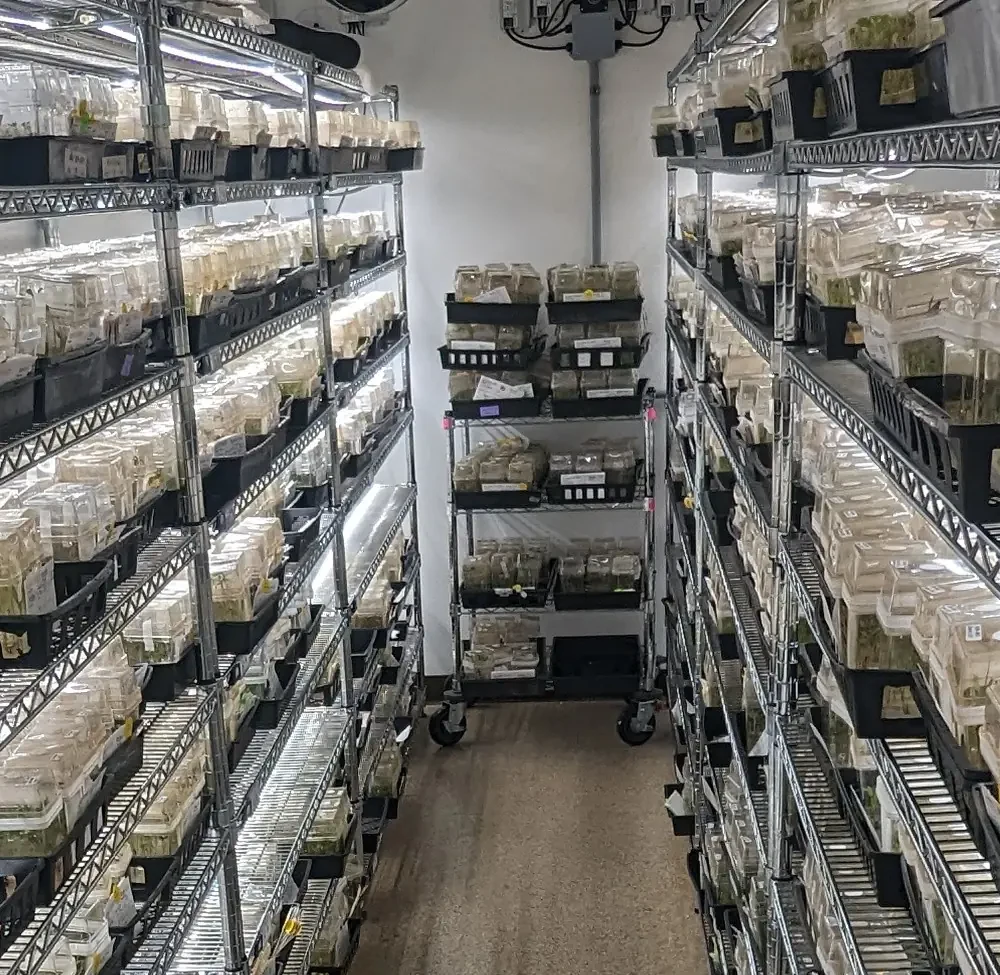
A long aisle in a tissue culture growth room with shelves of culture trays stacked floor to ceiling on both sides
fig. 04
[ photo · the growth room · courtesy of TissueGrown Corp. ]
The model

Software that tells you what to do, not just what happened.

Most tissue culture software models the past — every lot, every work event, every adjustment, all faithfully recorded. That's useful, but it doesn't tell anyone what to do tomorrow. InVitroManager flips that. The platform uses your historical data to build a production model that mirrors how production actually flows in your lab — stages, transitions, multiplication rates, container counts, real numbers from your own benchwork. Once that model is in place, the production planner schedules the decisions needed to drive inventory through every stage to hit your delivery commitments. Because the routing is solved, data entry collapses: the system already knows what's supposed to happen at each stage this week, so techs confirm rather than describe. The platform tells you what targets to hit each week, and the auto-assignment tool maps hood techs to those targets — so the schedule on the board IS the schedule on the benches.

Pistachio plants in greenhouse trays, dense canopy of production at scale
[ photo · production at scale · courtesy of TissueGrown Corp. ]
How it works

Inside the planner.

Five views from inside InVitroManager — production planning, week by week.

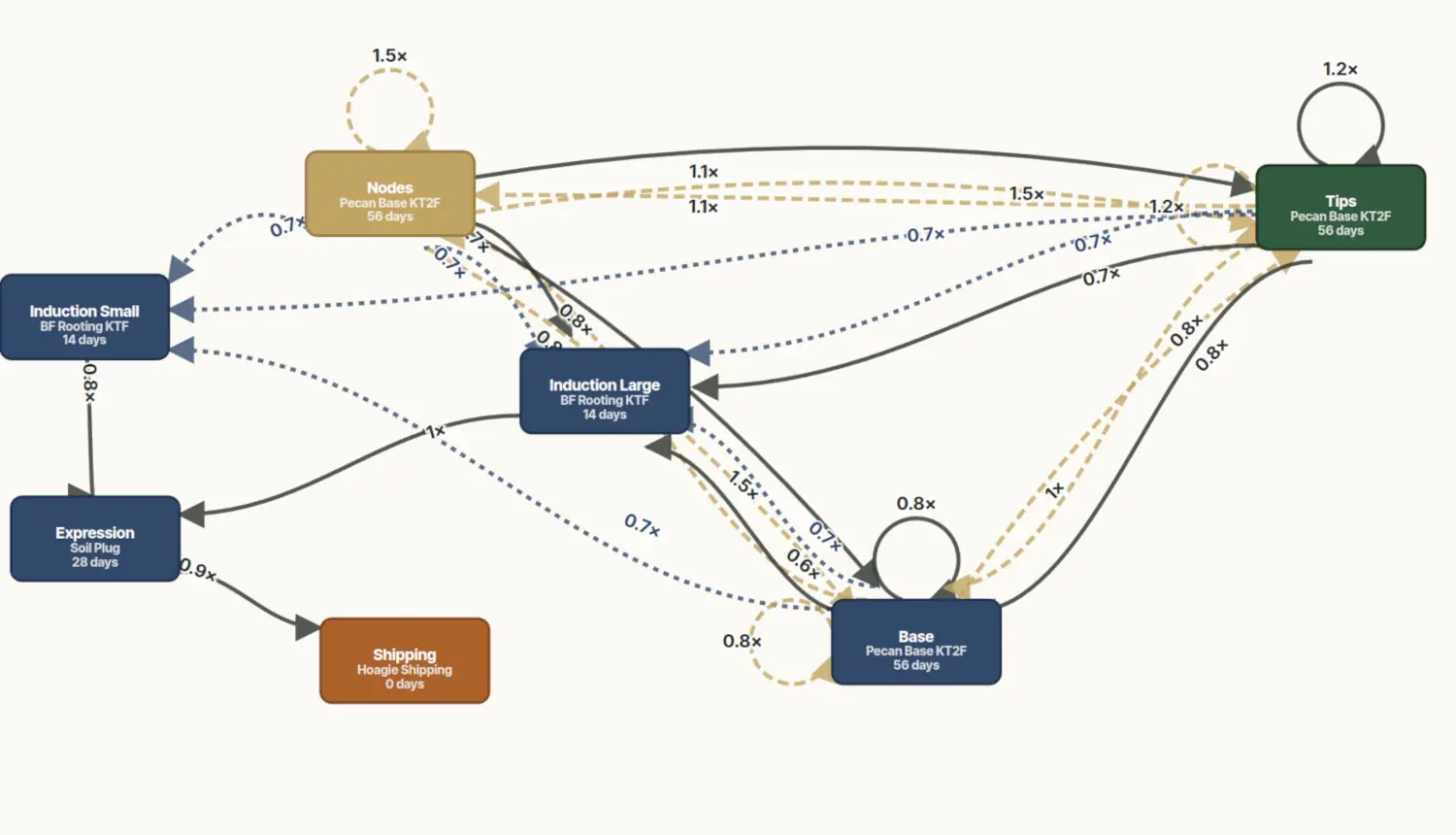
A pecan production network diagram showing stages (Base, Nodes, Tips, Induction Large/Small, Expression, Shipping) connected by routing edges labeled with multiplication rates 01 02 03
01
Stages as nodes, routing as edges

Each node is a stage in your operation. Each arrow is a possible routing — Standard, Excess, or Insufficient — for material moving between stages.

02
Multiplication rates, per edge

Every routing carries a multiplication rate (1.5×, 0.8×, etc.). Click any edge to edit it. The platform uses these to compute how much material every stage produces for every downstream stage.

03
Real numbers per stage

Each stage carries its real settings: container, days at stage, and the plant line growing in it. Numbers come from your historical data, not industry averages.

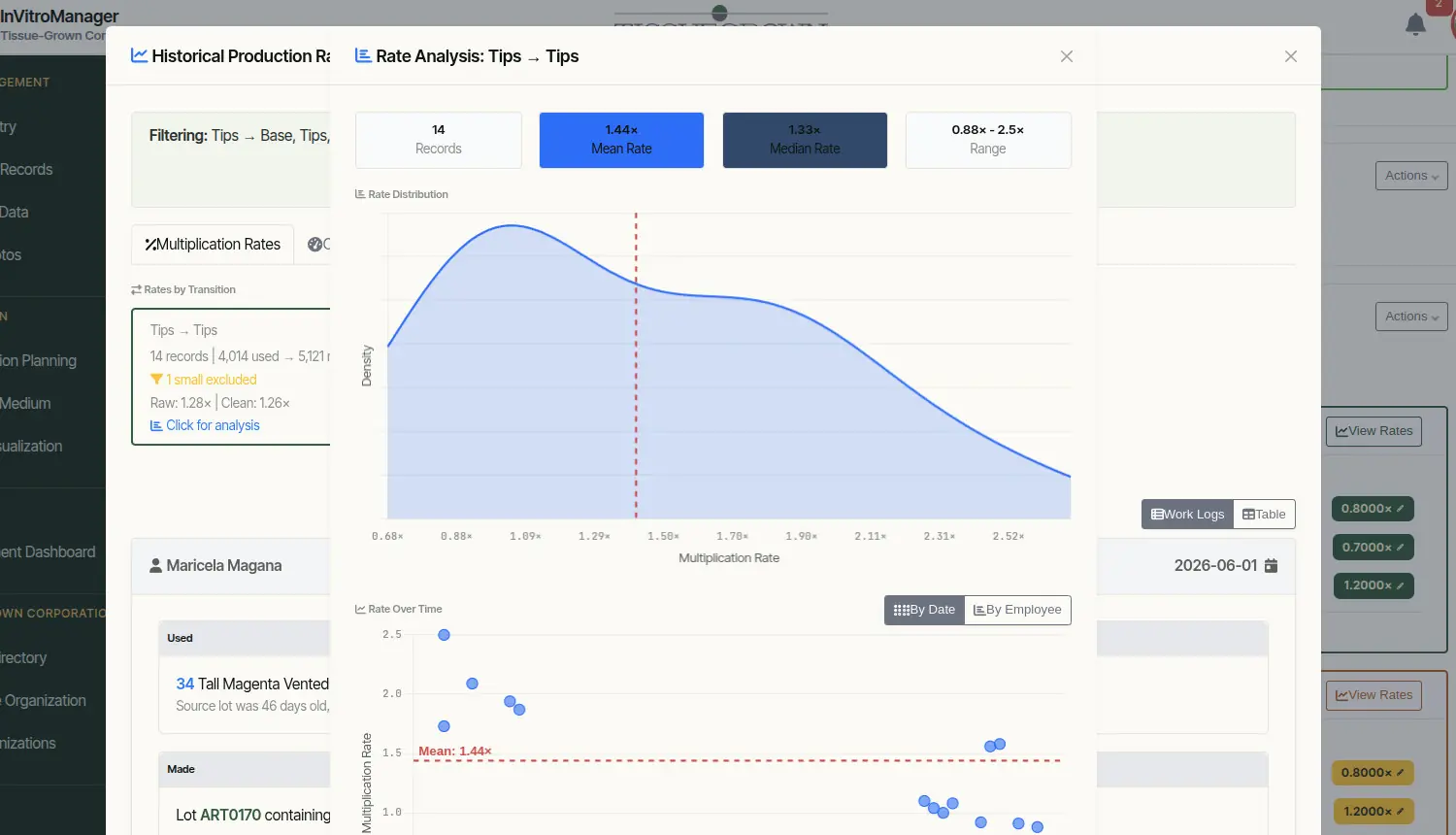
Rate Analysis modal showing multiplication rates for a Tips → Tips transition — 14 records, 1.44× mean rate, density distribution chart, and a Rate Over Time scatter plot of individual work events 01 02 03
01
Per-routing rates from real data

Every routing path — Tips → Tips, Tips → Base, Standard, Excess, Insufficient — gets its own multiplication rate, computed from actual work events on your bench. Here: 14 records, raw 1.28×, cleaned to 1.26× after excluding sparse samples.

02
Aggregate statistics, at a glance

Mean, median, range, and observation count surface together. Confirm which summary statistic the planner should use — and see how confident you are in the number before you commit it to the model.

03
Every observation, plotted

Each blue dot is a real work event from your records. The dashed line is the mean; the scatter shows how reliable that number is. Outliers stand out, and trends over time appear — so you know when a rate is drifting.

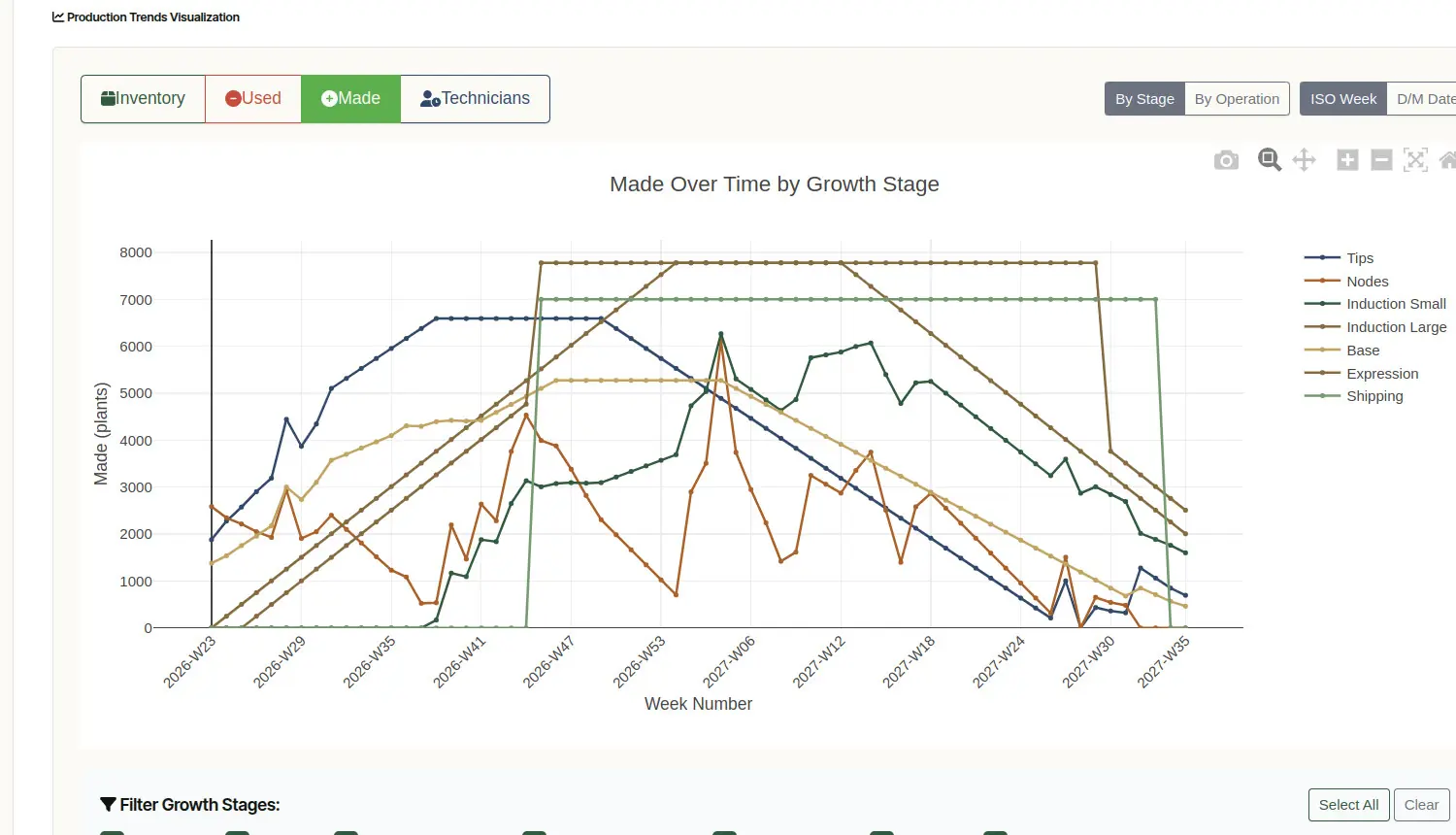
Production trends visualization — Made Over Time by Growth Stage, plotting each stage as a line across weeks from 2026-W23 to 2027-W35 01 02 03
01
The plan, in one chart

Production by growth stage, projected week by week from your commitments. Each line is a stage; the slope shows how fast material moves through your operation to meet its delivery dates.

02
Commitments anchor the curve

Your delivery commitments shape the shipping line at the top. When the plateau is steady, the dates you've promised are getting met. When it sags, something's at risk.

03
Four perspectives, same plan

Inventory, Used, Made, Technicians — flip between views to see the same plan as material on the bench, material consumed, material produced, or labor required.

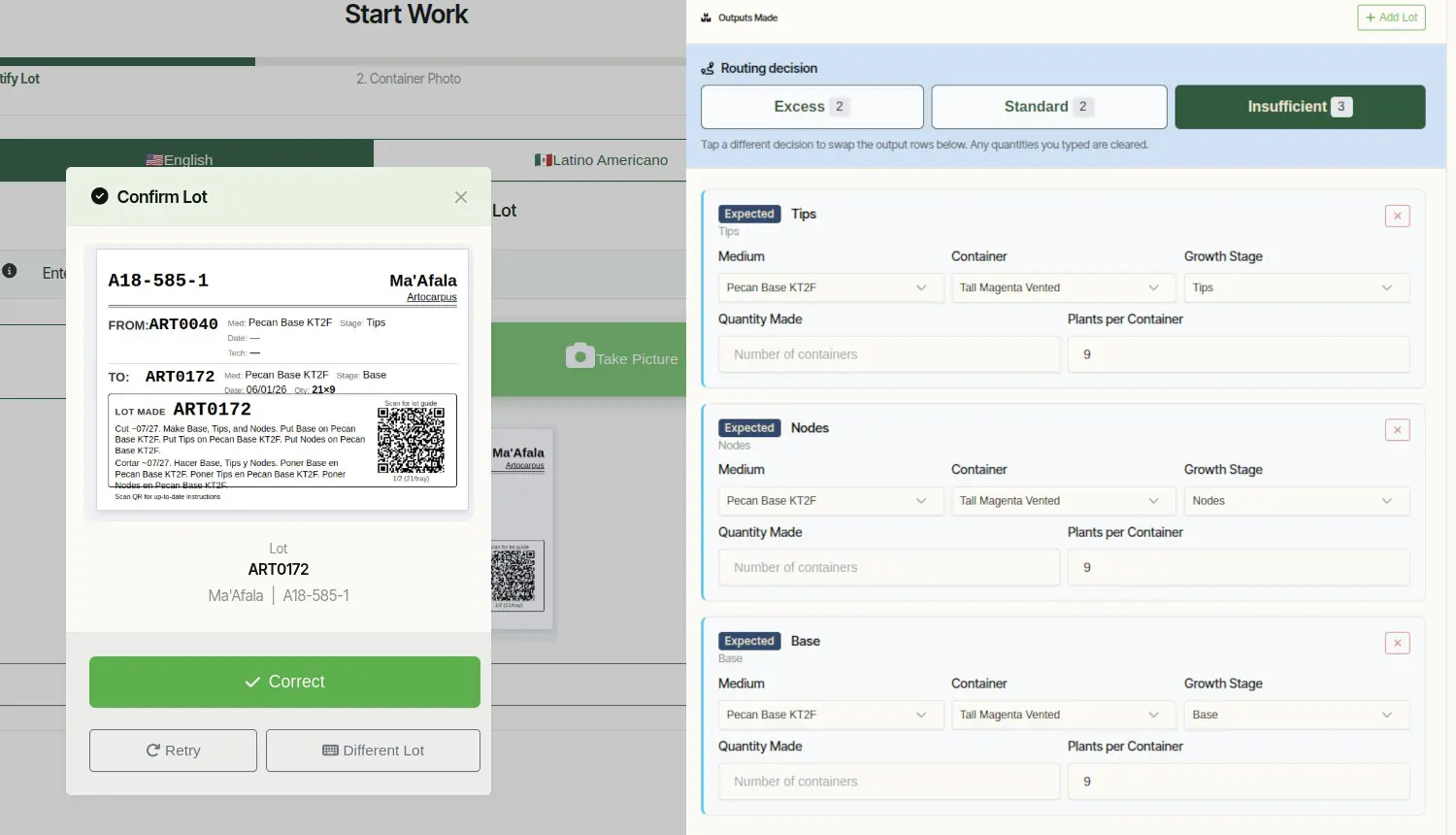
The Start Work screen with a Confirm Lot card on the left showing the next operation in English and Spanish, and an Outputs Made panel on the right with routing decision tabs and pre-filled output rows for each downstream stage 01 02 03
01
The plan, assigned per lot

Each lot's card shows exactly what to do next — cut what, make what, put it on what medium, route it to what stage. The production plan becomes the work order, lot by lot, in English and Spanish.

02
Routing assignment, swappable

The planner's routing decision is pre-selected (Standard, Excess, or Insufficient). Reality on the bench wins — tap to switch, and the output rows below swap to match.

03
Pre-filled outputs

The system already knows what should be produced at this stage — Tips, Nodes, Base — with the right medium and container. The tech enters quantities; the structure is the assignment.

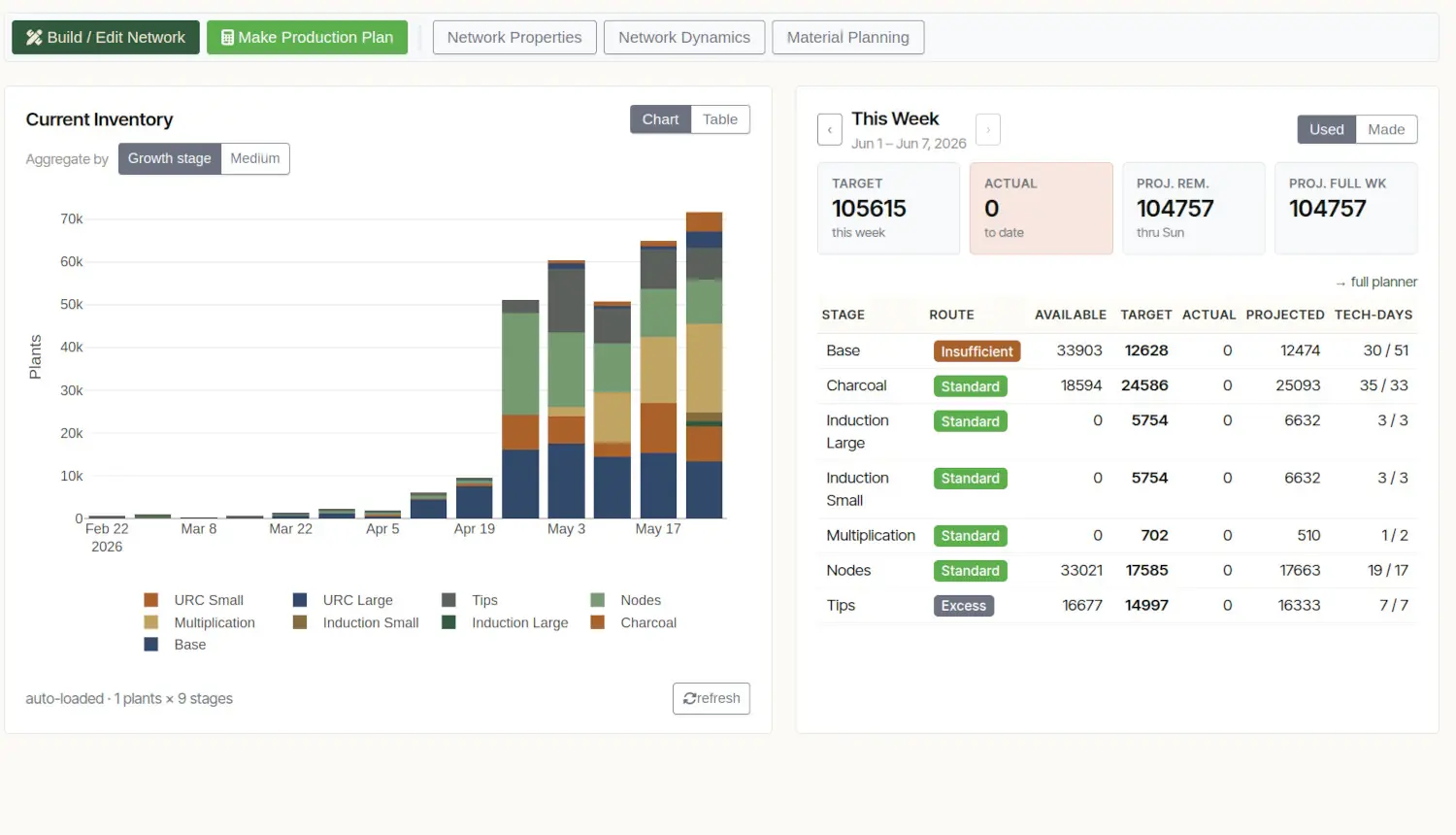
Production dashboard with a Current Inventory stacked bar chart on the left and a This Week panel on the right showing target, actual, projection, and tech-days per stage with routing decisions 01 02 03 04
01
Inventory trajectory, by stage

What's on the bench, week by week, in plants — not containers. Each color is a different growth stage. The slope tells you whether the operation is building up, holding, or drawing down at every stage simultaneously.

02
This week, in four numbers

Target derived from your delivery dates. Actual updates from real work logs. Projected Remaining and Full Week show what the planner expects given current pace — so you know mid-week whether the week will land.

03
Routing decisions, per stage

Each stage carries its routing — Standard, Excess, or Insufficient — set by the planner against current inventory. The bench knows whether to follow plan or compensate for over- or under-production upstream.

04
Tech-days, surfaced

Tech-days needed for the week (left number) vs. tech-days available (right). Mismatch is visible Monday morning — before the bench notices a shortfall, you can shift work, add hours, or adjust targets.

What it actually does

Six features. One operating system.

01 Your lab as a network. Define how material flows through your operation: multiplication loops that return cultures to the bench, steady-state pathways that hold a population at the right level, routing rules for everywhere in between. The network is the model the platform uses to schedule, route, and predict.
02 Schedule from delivery dates back. Set the dates when material has to ship. The production planner works backward from those commitments and figures out what each week between now and your delivery dates needs to look like to make them. Throughput targets, container counts, labor curves — all derived from your own model, not guessed.
03 Auto-assign techs to weekly targets. Once the week's targets are set, the assignment tool maps each hood tech to the stages they should work on and the lots they should touch. The work board on Monday morning reflects what the production planner determined needs to happen for the week to land on target.
04 Real multiplication rates, not industry averages. Every week the platform recomputes your actual multiplication rates from real operator data — by stage, by line, by tech. The schedule is anchored to those numbers, not assumptions from a textbook or a previous job.
05 Bottlenecks, before they bite. Equilibrium analysis surfaces the stages where your operation will run out of capacity weeks before the bench notices. Plan, hire, or shift work to flatten the curve before the bench gets bottlenecked.
06 Data entry, reduced to confirmation. When the system already knows what's supposed to happen at each stage this week, work logs become a confirmation rather than a description. Techs record what actually changed, not what they did — and the schedule stays in sync with reality.
Plus the team

Production engineers and analysts who run the model with you.

Your subscription includes the production engineers and analysts who build the model with your team, calibrate the production planner to your actual rates, configure the auto-assignment tool to your staffing patterns, and stay on call as your operation changes. Production planning isn't software you install — it's a working system you operate with us.

Production management, in one line

Tell the lab what to do,
not just what was done.

Talk to us about the week you've been trying to plan accurately.

Talk to us

How we engage

We start with a 30‑minute conversation about your operation. If we're a fit, we visit; if we're not, we'll point you to someone who is.